
Xiaomi's Xring O3: A 3nm In-House Chip That Puts Qualcomm on Notice
Xiaomi's second-generation in-house processor, the 3nm Xring O3, is in mass production and debuts in the Xiaomi 18 Fold this September — a direct challenge to Qualcomm and MediaTek at the premium end of the phone market.
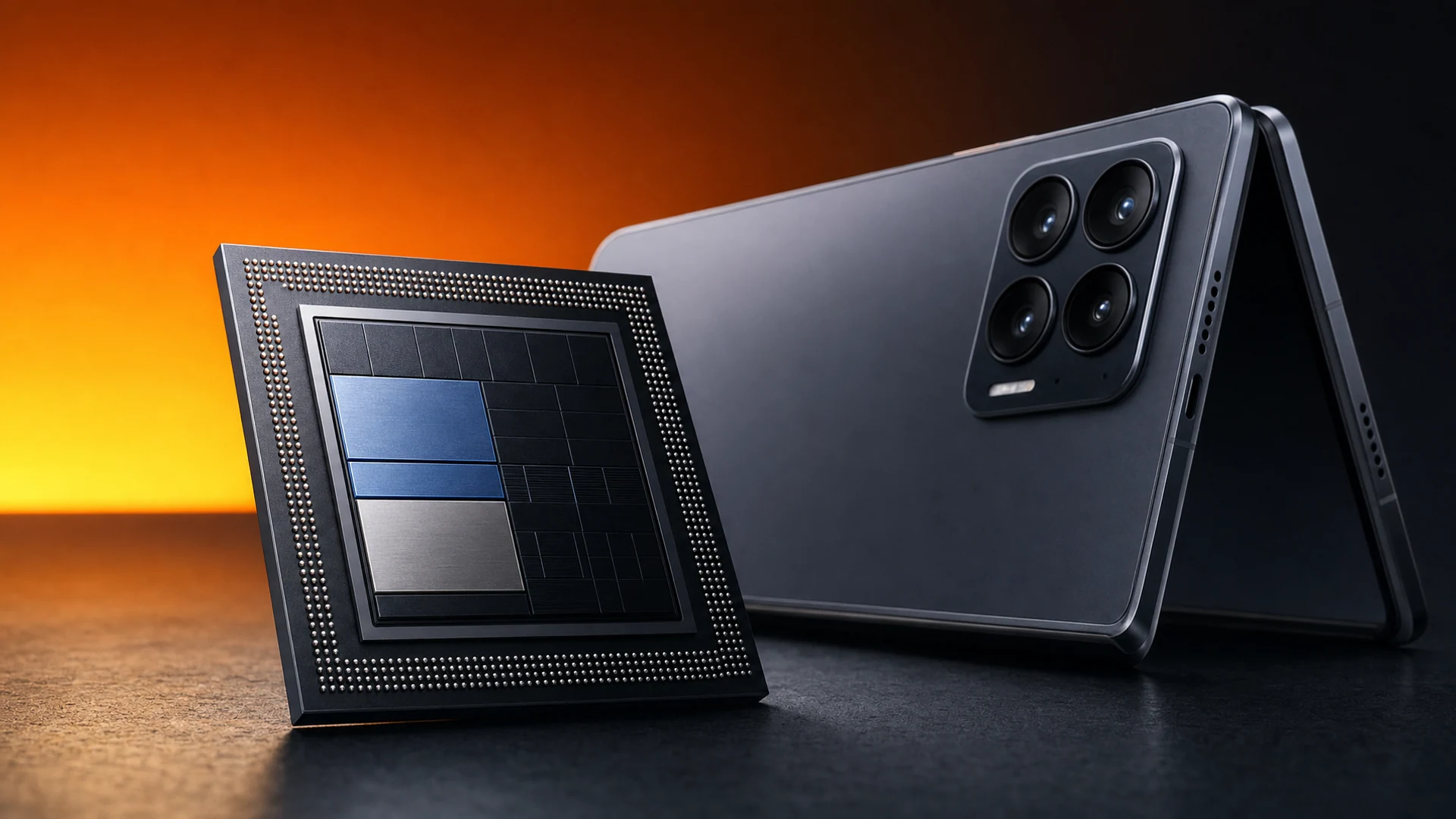
A 3nm chip aimed squarely at the status quo
On August 24, 2026, Xiaomi Corp. unveiled the Xring O3, its second-generation in-house smartphone system-on-a-chip, and made the competitive intent unmistakable. The Beijing-based company — the world’s third-largest smartphone vendor — announced the 3nm processor in a Weibo post, positioning it as a direct challenge to Qualcomm Inc. and MediaTek Inc., the two suppliers that have powered its flagships for years.
The Xring O3 is the follow-up to the Xring O1, Xiaomi’s first proprietary smartphone processor, launched roughly a year ago. Fabricated by Taiwan Semiconductor Manufacturing Co. (TSMC) on its N3P process node, the chip packs 24 billion transistors into a 133 mm² die and is already in mass production, according to Xiaomi. It makes its commercial debut in September inside the Xiaomi 18 Fold and the Xiaomi Pad 9 Pro Max, both launching first in China; preorders for the foldable are already open.
The numbers behind the launch
Xiaomi is leaning hard on performance claims. The company says the Xring O3 is the first mobile SoC to cross the 5-million-point mark on the AnTuTu benchmark, scoring 5.22 million. The 10-core, “all-big” CPU design — which drops efficiency cores entirely — delivers roughly 60% higher performance, while a 16-core G2-Ultra NX GPU is said to boost graphics by 85% with 64% better efficiency. The chip is also the first smartphone processor to support LPDDR6 memory, at up to 113.8 GB/s of peak bandwidth.
The AI story matters just as much. A quad-core NPU delivers up to 200 TOPS of tensor performance, with Xiaomi citing a 45% faster NPU and more power-efficient image processing. Founder Lei Jun confirmed the 3nm process in a WeChat post, placing it close to the node used in Apple’s latest A19 Pro chips and ahead of Huawei’s in-house designs. Notably, the O3 stays on 3nm while leading rivals move to 2nm — a sign that Xiaomi is betting on architecture and feature upgrades rather than node bragging rights.
Two sibling chips launched the same day. The Xring O100 is a 6nm AI accelerator that stacks memory directly on the processor for 1.22 TB/s of near-memory bandwidth, designed to run Xiaomi’s MiMo large language model on-device across phones, connected cars, and robotics. The Xring D100 is a 3nm autonomous-driving chip with a 20-core CPU and support for up to 160 GB of unified memory. Both have completed development and are slated for deployment next year, with commercial availability of the D100 expected in 2027.
Why this matters to the mobile supply chain
This is not a hobby project. Xiaomi says it has invested more than 20 billion yuan — roughly $3 billion — in the Xring program, and its semiconductor design unit has grown past 3,000 people, up from 2,500 a year ago. In-house silicon changes the economics of the flagship business: Xiaomi gains direct control over component costs, power budgets, and the AI feature roadmap, and it joins Apple, Samsung, and Huawei in the club of OEMs that design their own processors.
For Qualcomm and MediaTek, the pressure is strategic. The premium tier has long been a profit center for both suppliers, and losing a top-three smartphone vendor’s flagship volume — even partially — reshapes the market math. Xiaomi will still rely on external suppliers across its broader portfolio, but the top of the line no longer comes off the shelf. For channel partners and procurement teams, the practical signal is negotiating leverage: a vendor that can design its own flagship silicon negotiates differently with the suppliers it still uses for the rest of its lineup.
The risks deserve equal attention. Initial volumes are modest: one person familiar with the matter cited a shipment target of 200,000 to 300,000 units for the first folding phone powered by the chip. And while the design work is in-house, every Xring chip is fabricated by a single foundry, TSMC — a concentration risk that internal engineering cannot fully remove. The O100 and D100 won’t reach commercial deployment until next year at the earliest, so the near-term revenue impact is limited.
The takeaway for business readers
Xiaomi’s chip program is real, funded, and shipping — and it marks a structural shift in how flagship phones are built and sold. The September launch of the Xiaomi 18 Fold is the proof point to watch. Benchmark scores are one thing; whether the in-house silicon delivers on battery life, on-device AI features, and price is what will decide whether this experiment becomes the industry’s template for the next decade.
Updated August 25, 2026