
Smartphone SoC Shipments Slump 15% as Memory Price Shock Reshapes the Handset Market
Global smartphone SoC shipments fell 15% YoY in H1 2026 as surging DRAM and NAND prices crushed entry-level demand, pushed MediaTek and Qualcomm volumes down more than 25%, and accelerated a broader handset market reshuffle.
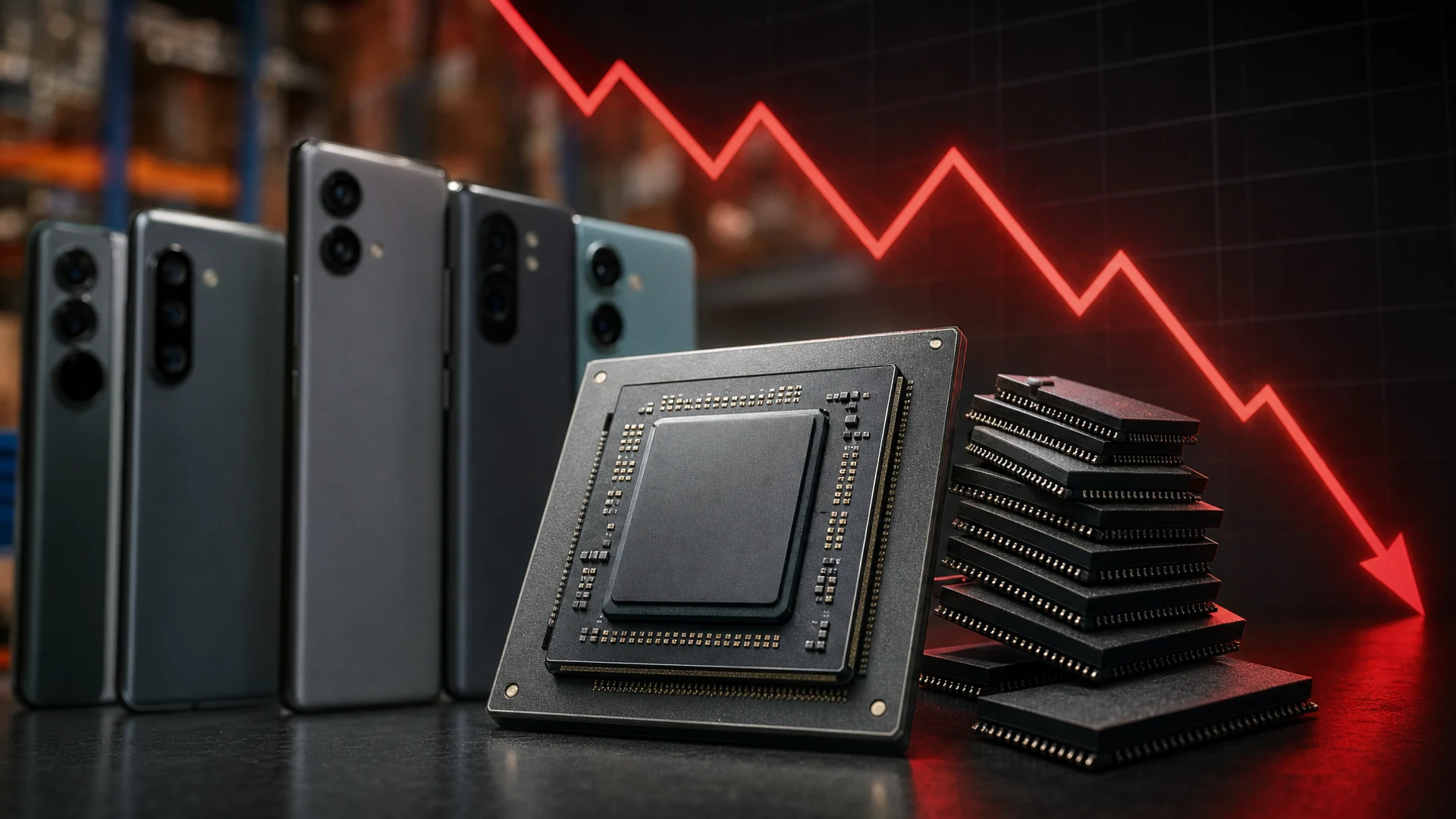
Global smartphone SoC shipments fell 15% year-on-year in the first half of 2026, with MediaTek and Qualcomm — the two largest mobile chipmakers — each seeing volumes drop by more than a quarter, according to Counterpoint Research’s latest SoC market report (published via EE Times Asia).
The collapse is not an isolated chip-cycle blip. It is the downstream symptom of a memory price shock that has reshaped the entire mobile supply chain: rising DRAM and NAND costs, cautious inventory management by OEMs, and longer consumer replacement cycles are all pulling volumes down at once.
What the data shows
Counterpoint’s Global Smartphone SoC Shipments Preliminary View puts the H1 2026 decline at 15% YoY, and the firm expects a 14% drop for the full year. The entry-level segment is bearing the brunt — Counterpoint projects shipments there to fall by more than 30% in 2026.
Independent figures corroborate the trend. FDM CCS Insight estimates global smartphone shipments fell 7% YoY in Q2 2026, with a 12% decline forecast for the whole year. Developed markets saw only low single-digit drops; emerging markets, where buyers are far more price-sensitive, experienced the steepest falls.
The memory price shock behind it
The root cause is the memory crisis. TrendForce data shows DRAM and NAND contract prices have risen five- to sevenfold since the start of 2025. In Q2 2026 alone, contract prices for LPDDR4X jumped 70–75% quarter-on-quarter, and LPDDR5X rose 78–83% (TrendForce). Counterpoint separately noted that memory prices have climbed nearly fourfold since September 2025, pushing average smartphone prices up about 15% by the end of Q2.
At the low end, the impact is existential. IDC estimates memory costs have risen close to 300% in a year and now exceed 65% of the bill of materials for entry-level handsets. Vendors have responded by reducing discounts, trimming configurations, and — in many cases — simply not launching new budget models.
How OEMs are adapting
Apple, for example, has already raised iPhone prices by up to $300. TrendForce estimates memory’s share of the iPhone Pro’s BOM has climbed from roughly 10% a year ago to about 34%, and could exceed 40% in H1 2027 — even as the bill of materials for an iPhone 18 Pro 256GB is expected to rise about 38% YoY.
Qualcomm’s handset revenue, meanwhile, fell 20% as chip volumes contracted. For B2B buyers and channel partners, the pattern is clear: premium devices are absorbing the cost shock through price hikes, while budget portfolios are shrinking or disappearing.
India offers a vivid case study. According to IDC, H1 2026 shipments fell 7.9% YoY to 64.2 million units — the weakest first half in five years — even as market value grew 3.6%. Average selling prices hit a record $315, up 14.4% YoY. The sub-$100 segment collapsed 74.3%, its share dropping from 15.6% to 4.5%, while the $400–600 band grew 60.3%. IDC expects India’s market to decline more than 15% in H2, bringing full-year volumes to roughly 128–130 million units versus 152 million in 2025.
What this means for business buyers
For technology and procurement leaders, three signals matter:
-
Memory pricing is a structural cost, not a transitory spike. Supply chain plans built on 2025 component prices will fail. Contracts should include memory price escalation clauses and flexible BOM options.
-
The entry-level market is being repriced out of existence. The sharp contraction in sub-$100 phones — in India, shipments plunged 74.3% YoY — is shifting demand toward refurbished devices, financing, and longer upgrade cycles. FDM CCS Insight notes second-hand phone sales grew 3% YoY and are expected to rise close to 9% for the full year. Enterprise mobility and device-resale programs should prepare for a larger secondary-market role.
-
Premiumization is accelerating. As budget devices disappear, average selling prices rise even as volumes fall — a margin paradox that favors OEMs with pricing power (Apple, Samsung) and pressures volume-driven brands. Channel partners should rebalance inventory toward higher-ASP tiers and services.
Counterpoint also notes that GenAI-equipped smartphones continue to gain momentum despite the downturn — a rare growth vector in a contracting market. For now, the industry’s challenge is less about demand generation and more about managing a cost structure that has fundamentally changed. Companies that reprice, resize, and re-plan around memory volatility will navigate the 2026 downturn; those that wait for prices to fall may find the market has moved on.
Updated August 15, 2026