
Record 14% drop in smartphone shipments forecast for 2026 as memory costs soar
Counterpoint Research says global smartphone shipments will fall 14.3% to about 1.07 billion units in 2026 as AI-driven memory demand pushes up component costs and forces manufacturers to cut low-margin models.
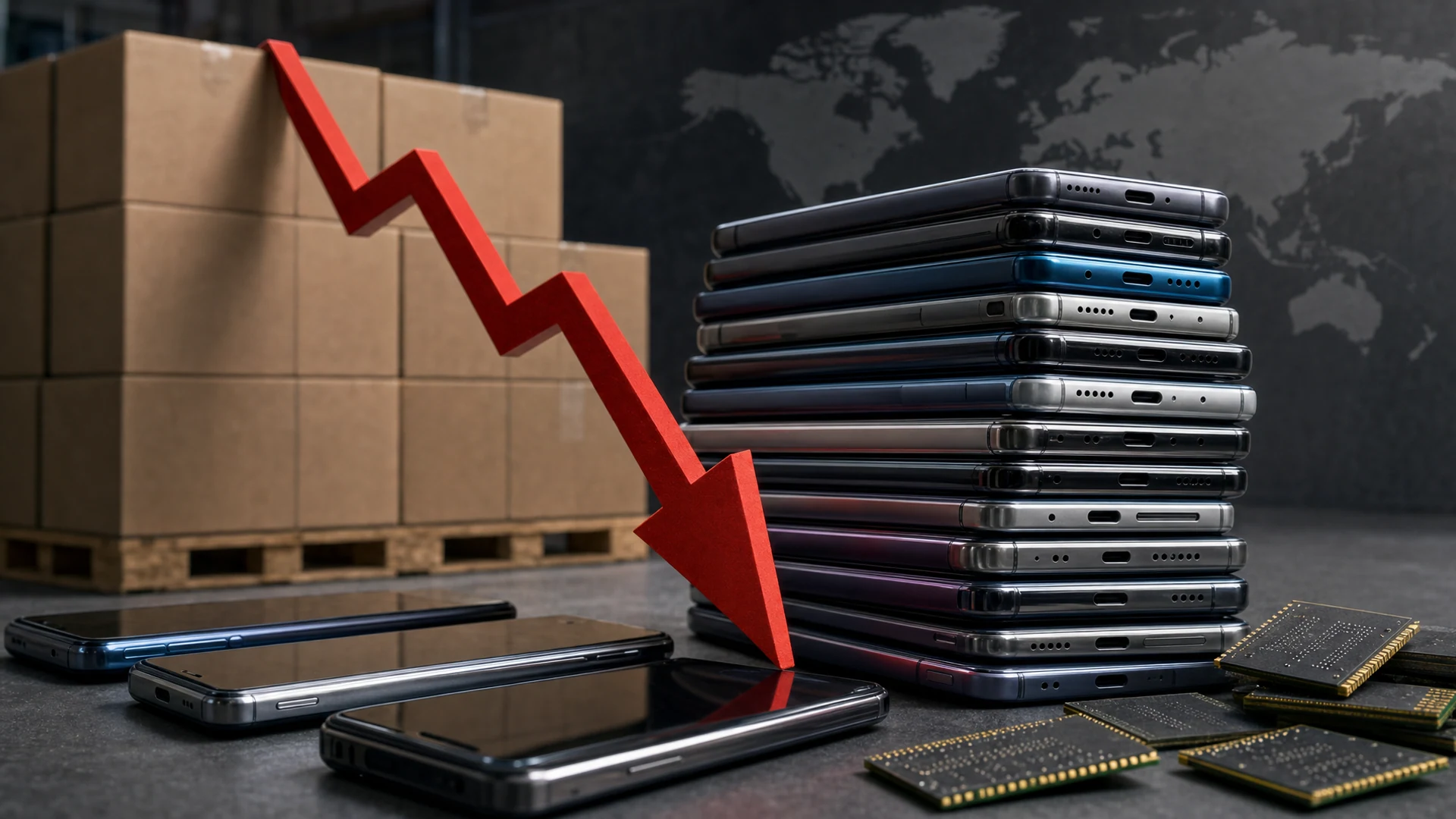
Global smartphone shipments are heading for their steepest annual decline on record, with analysts now expecting volumes to fall more than 14% year over year to about 1.07 billion units in 2026. That is the latest forecast from Counterpoint Research, and the main culprit is not weak consumer demand — it’s a memory-chip squeeze driven by the AI boom.
What happened
The market was already showing modest momentum before this downturn. Shipments rose 4% to 1.21 billion units in 2024, then grew another 3% to 1.25 billion in 2025. Now Counterpoint expects a sharp reversal, with the decline extending into 2027 — a further 1.4% contraction — before recovery arrives in 2028.
The core problem is supply allocation. Memory suppliers are prioritizing high-bandwidth memory and server DRAM for AI data centers over chips for consumer electronics. Smartphone makers are left competing for scarce DRAM and NAND capacity at dramatically higher prices. That is why the firm describes this as more than a temporary demand slump: higher component costs are pushing manufacturers to remove products and configurations that are no longer economically viable, especially at lower price points.
Why memory costs matter to business buyers
This is not just a consumer story. Enterprises that refresh employee device fleets will feel it directly. Apple, Microsoft, Dell, Lenovo, HP and HPE have already raised prices on smartphones, PCs, gaming consoles and servers by up to 15%, according to industry reports. The memory inflation behind those moves is severe: JPMorgan Global Research estimates DRAM prices will have risen more than 400% from the start of 2024 to the end of 2026.
The effect is visible in real products. Retail DDR5 memory kits that sold for $80–250 in mid-2025 now cost $300–650 or more, while server DRAM lead times have stretched beyond 40 weeks. For procurement teams, that means budget forecasts for hardware are increasingly unreliable, and entry-tier devices are vanishing from roadmaps.
Who wins and who loses
Not every OEM is equally exposed. Samsung is projected to grow 0.8% in 2026 and reclaim the top spot from Apple, according to Counterpoint. Its highly integrated supply chain and mature distribution network give it more buffer against memory inflation. Apple is expected to weather the downturn better than most, while OEMs based in China are forecast to see shipment declines of 15% to 34% this year.
The pain is already showing up in price-sensitive markets. In India, total smartphone shipments fell roughly 10% year over year in the second quarter of 2026, with the sub-₹20,000 segment hit hardest by hardware scarcity and rising prices. That segment is a bellwether for global volume, so the signal should worry any business that depends on affordable handsets.
Material risks to plan around
The most immediate risk is product availability. Fewer entry-level and mid-range SKUs means longer lead times and higher prices for bulk device purchases. Replacement cycles will likely stretch as finance teams postpone upgrades, which in turn puts more pressure on device management and repair strategies.
There is also a concentration risk in the supply chain. When memory vendors prioritize AI workloads, consumer hardware becomes the swing capacity. That creates sudden shortages and makes contract pricing volatile. Procurement teams should not assume that current quotes will hold for more than a quarter or two.
What to do now
Treat memory pricing as a leading indicator. If DRAM contract prices stabilize, smartphone supply conditions should improve; until then, expect continued volatility.
Procurement teams should consider four moves:
- Lock in volume agreements early with vendors that have vertically integrated memory supply.
- Extend device refresh cycles where practical, and budget for higher repair and battery-replacement costs.
- Reassess mobile device management policies to keep existing fleets usable longer.
- Favor OEMs with supply-chain resilience, such as Samsung, when negotiating enterprise contracts.
The smartphone market is not collapsing because people stopped wanting phones. It is being repriced because memory chips have become AI infrastructure fuel. For B2B buyers, the smart response is to adapt procurement strategy now — before the next wave of price increases lands.
Updated August 24, 2026