
The memory-cost squeeze: how Q2 2026 redrew the smartphone map
Global smartphone shipments fell 6% year on year to 272 million units in Q2 2026 as high memory prices reshaped the market. Apple and Samsung gained share while Xiaomi fell 26% — and B2B buyers are feeling the ripple effects.
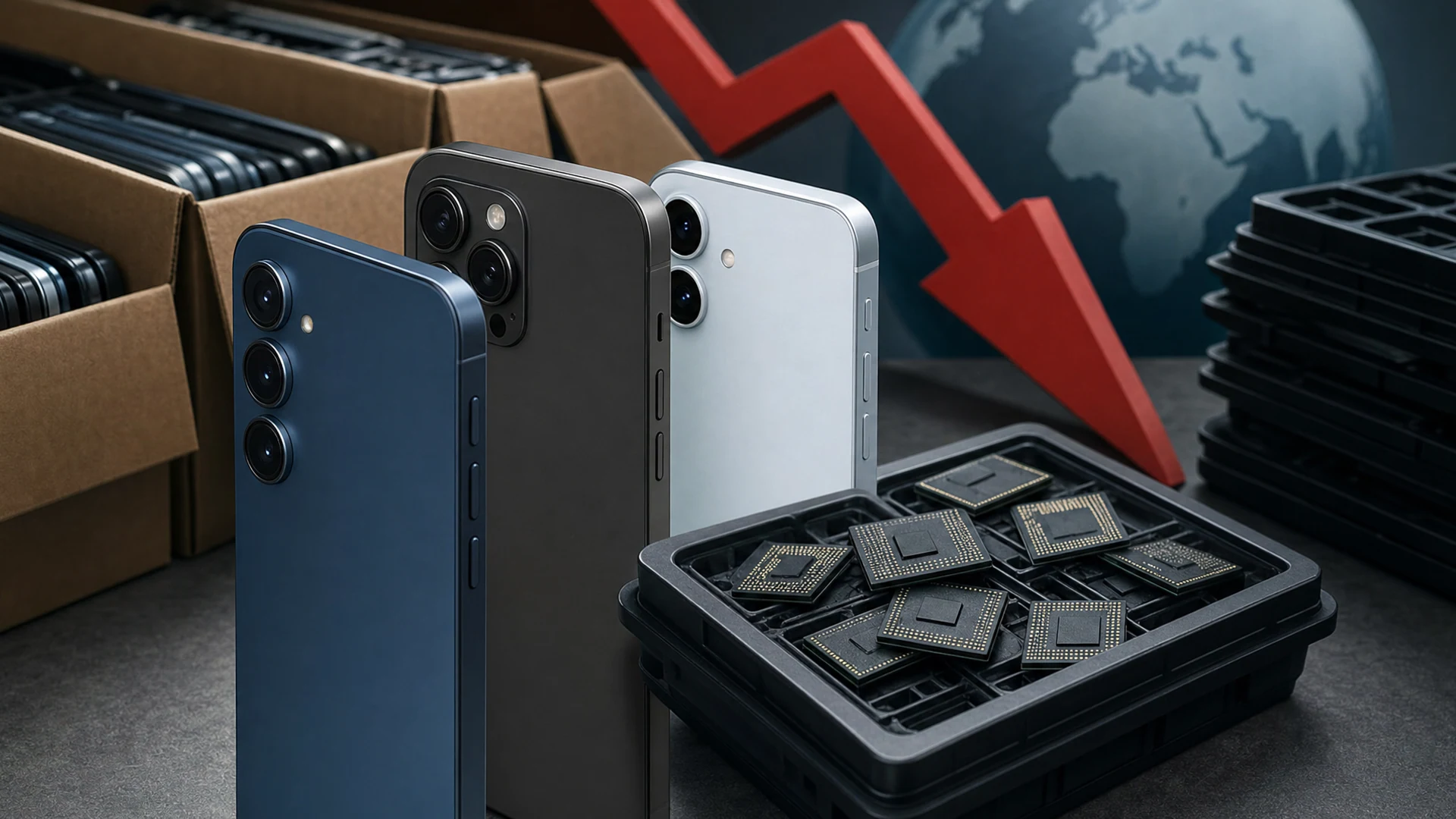
Global smartphone shipments fell 6% year on year to 272 million units in the second quarter of 2026 — and the cause wasn’t weak demand. It was persistently high memory prices, according to research firm Omdia, which says manufacturers are now overhauling pricing and product strategies in response.
The report lands in the middle of the industry’s most consequential memory-cost cycle in years. Its vendor rankings show a market splitting into two tiers: premium players gaining share while value-tier players absorb the pain.
The market: front-loaded, then flat
Omdia attributes the decline to front-loaded demand in the first quarter of 2026, with the market entering what it calls an adjustment phase driven by the ongoing memory cost cycle. In practice, fewer devices left factories globally — but the decline was far from uniform.
Samsung kept its crown as the world’s largest smartphone maker, shipping 60.5 million devices, up 5% year on year, for a 22% share. Apple recorded its strongest-ever second quarter with 55.1 million iPhones, up 23% — a record 20% share in what is normally its weakest seasonal period.
The middle of the market staggered. Xiaomi stayed third with 31.2 million units but fell 26% — the steepest drop among the top five. OPPO, including realme and OnePlus, shipped 28.4 million units, down 17%, while vivo rounded out the top five at 21.5 million, down 18%.
Why the split is so sharp
The divergence tracks memory exposure. Omdia flagged Xiaomi as the most exposed of the top five to rising memory costs, noting that more than half of its shipments are priced below US$200. In a $150–$200 handset, memory makes up a large share of the bill of materials; when DRAM and NAND prices inflate, that geometry turns brutal fast. Apple and Samsung, by contrast, have pricing power and margin headroom that absorb component inflation — and their premium positioning gains relative share when value-tier rivals are forced to pull back.
Xiaomi’s own results confirm the pressure. Smartphone revenue fell 12.5% to RMB 44.27 billion, with the average selling price hovering around RMB 1,310, while group revenue dropped 10.9% to RMB 99.1 billion and adjusted net profit tumbled 43.1%. Even diversification into electric vehicles and a semiconductor windfall, per the company’s earnings coverage, couldn’t fully mask the handset slide.
Rival trackers agree on direction, if not magnitude. Counterpoint’s early estimate put Q2 shipments down 11%, while IDC counted 277.5 million units, a 6.7% decline. Counterpoint also found that industry revenue grew 7% and average selling prices rose 17%, with phones priced above $600 reaching a record 29% of global unit sales in the first half. The market is shrinking in units, not in dollars.
The refurbished ripple
The most visible spillover is in displays. Omdia reports that Q1 2026 display panel shipments to the refurbishment market hit 298 million units, up 20% year on year — the first time refurbished-device displays outnumbered those supplied to smartphone makers, which received 289 million. The firm expects display demand for new phones to fall 12% across 2026. The economics are simple: when new memory costs soar, second-life devices become the de facto value tier.
What B2B buyers should watch
For enterprises, this cycle changes the procurement math in at least three ways.
First, expect shorter promotional windows and thinner discounts on low- and mid-tier devices as OEMs defend margins. Standard-issue fleets built around $200–$400 handsets face the hardest reset; premium mobility programs are, paradoxically, better insulated.
Second, memory-cost inflation isn’t phone-specific. The same cycle is squeezing other hardware categories, so IT and procurement teams should treat memory pricing as a cross-category risk rather than a smartphone line item.
Third, the refurbished channel’s growth signals a durable secondary supply. Cost-sensitive fleets, kiosk deployments, and BYOD programs can tap it as new-device prices drift upward.
Planning takeaway: refresh-cycle budgets should price in at least another quarter of elevated memory costs — and check which vendors in your shortlist carry the most exposure to them. The next quarterly numbers will tell you whether the top two keep pulling away.
Updated August 15, 2026