
The $100 Smartphone Is Nearly Extinct — and AI's Memory Appetite Is Reshaping the Market
U.S. smartphone sales fell 5% in Q2 2026, but the sub-$100 tier collapsed 64% — and Apple, Samsung, Motorola and Google absorbed the memory-cost shock that smaller OEMs couldn't. Counterpoint's data shows AI-driven memory demand is consolidating the market.
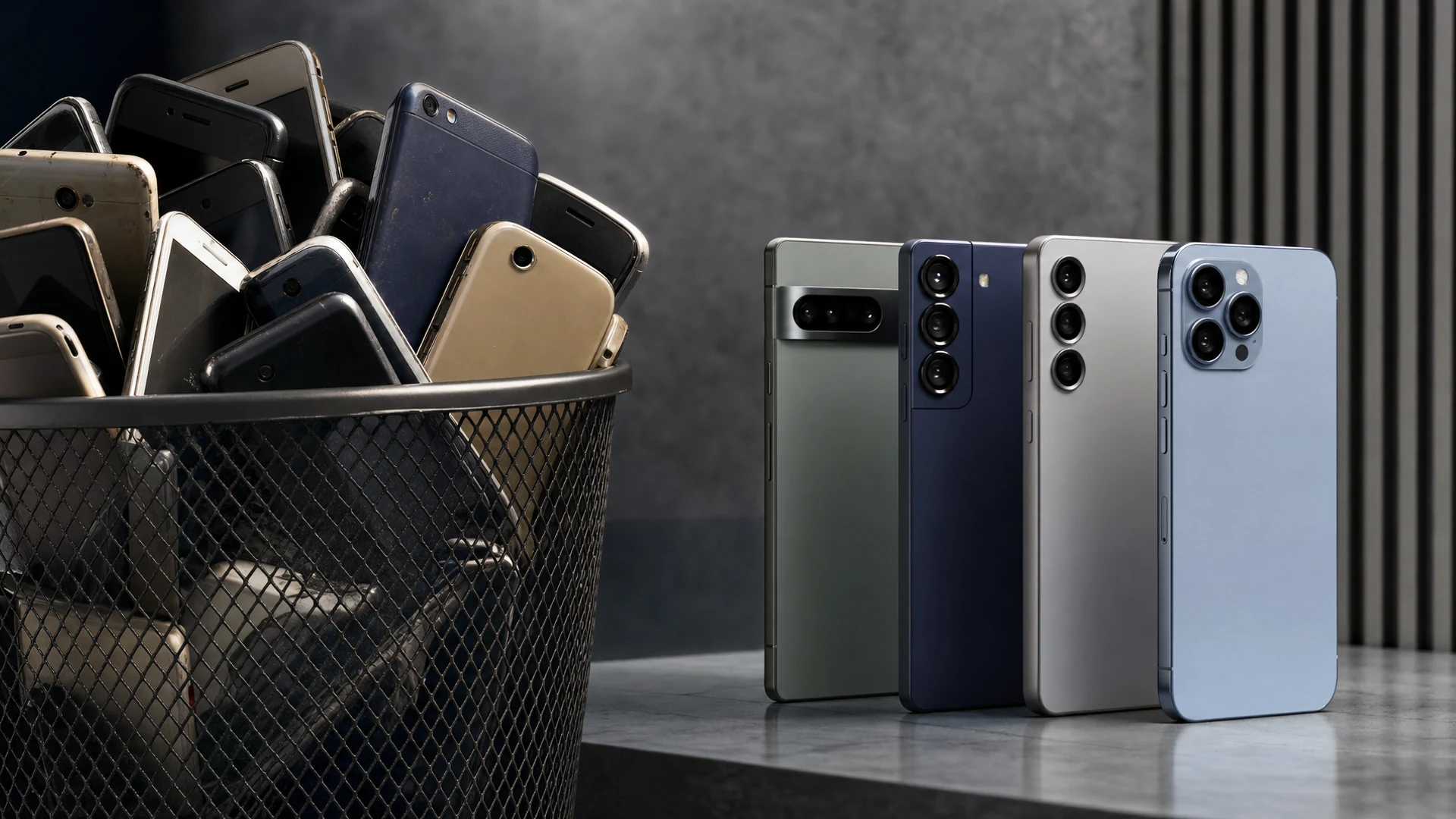
Counterpoint Research published fresh data this week that reads like a market-wide stress test. U.S. smartphone sales fell 5% year over year in the second quarter of 2026, and the damage was anything but evenly spread: combined sales for Apple, Samsung, Motorola and Google slipped only 4%, while every other brand on the market lost 45% of its volume. The worst carnage was at the bottom. Sales of handsets priced under $100 tumbled 64% as manufacturers stopped shipping some low-end devices or raised prices just to cover components.
The story behind the numbers isn’t shifting consumer tastes — it’s the memory market. Counterpoint analyst Blake Przesmicki points to higher memory prices and broader macroeconomic pressure on demand. DRAM prices have climbed roughly 70% since early 2025 and NAND flash has nearly doubled, according to figures from Tom’s Hardware cited in coverage of the report. Memory now accounts for as much as 20% to 64% of the total bill of materials for a budget phone. The supply-side logic is blunt: Samsung, SK Hynix and Micron have shifted wafer capacity toward high-margin AI server memory — HBM and high-density DRAM — leaving commodity smartphone memory in short supply. Analysts don’t expect meaningful relief until new fabrication capacity comes online around 2028.
Scale has become the moat
Counterpoint’s read is that large manufacturers are using scale to lock in component pricing and supply agreements that smaller rivals simply can’t match. That’s why the four biggest brands held up while the long tail of the market plunged 45%. This is, in effect, a structural consolidation event hiding inside a pricing story.
The response from the surviving players is already visible at the retail level. Motorola raised prices on several Moto G models during the quarter, and Samsung bumped the Galaxy A17 by $50 in July. The $200–$300 price band tripled its U.S. market share year over year in Q2, with the Galaxy A-series (including the A26) and the Moto G line among the few credible options left in that bracket. In China, the picture is similar: smartphone sales fell 8.6% in the first 30 weeks of 2026, and declines returned to double digits after the 618 shopping festival, per Counterpoint analyst Ivan Lam.
Apple’s pricing dilemma
For Apple, the cost shock is arriving right as it prepares the next iPhone lineup. Counterpoint estimates that manufacturing an iPhone 17 Pro Max currently costs about $500, while the bill of materials for the iPhone 18 Pro Max could approach $1,000. A 12GB/1TB configuration could add roughly $300 to the build cost versus the equivalent iPhone 17 Pro Max, with other models seeing $200–$250 increases. If Apple passes the full amount through to preserve margins, retail prices for the Pro lineup could climb $250–$350 — putting a 1TB iPhone 18 Pro Max near $1,849–$1,949. Apple, of course, has the margin headroom and brand pricing power to absorb some of this. Counterpoint’s core argument is that this is exactly the kind of shock the biggest players can ride out and the smaller ones can’t.
What it means for business buyers
For B2B readers, several practical consequences follow:
- Budget for higher device costs. Counterpoint expects conditions to get tougher in the second half, with rising memory and system-on-chip costs pushing manufacturers toward further price increases, and prices climbing into Q3 as Apple launches its new lineup.
- The sub-$100 tier is effectively a declining category. Any procurement strategy built on ultra-low-cost handsets needs a plan B — whether that means the $200–$300 band, longer device lifecycles, or refreshed-device programs.
- Negotiating power is concentrating. Companies that buy devices in volume should expect pricing power to keep shifting toward the handful of OEMs with scale, which affects channel margins and wholesale agreements across the board.
The risks to watch
The main risk is demand elasticity. Consumers are already price-sensitive — that’s part of why U.S. and China sales are falling. Each new round of increases risks further cooling demand, and mid-tier brands without Apple-level pricing power face a squeeze between component costs and consumer resistance. The longer-term risk is structural: with no memory price relief expected before roughly 2028, today’s ‘temporary’ premiumization could harden into a permanent re-pricing of the market.
For now, the message from Counterpoint’s data is clear: the smartphone market is being rewritten by the memory market, and the companies with the scale to absorb the shock are the ones setting the new rules. Everyone else is paying the difference.
Updated August 16, 2026