
Samsung ships 60.5M phones in Q2 2026 as memory-chip costs squeeze budget rivals
Samsung shipped 60.5 million Galaxy phones in Q2 2026 for a 22% global share while the market shrank 6% to 272 million units. Apple hit a record quarter, but Xiaomi, OPPO and vivo all fell sharply as a memory-chip crunch hit the sub-$400 segment hardest.
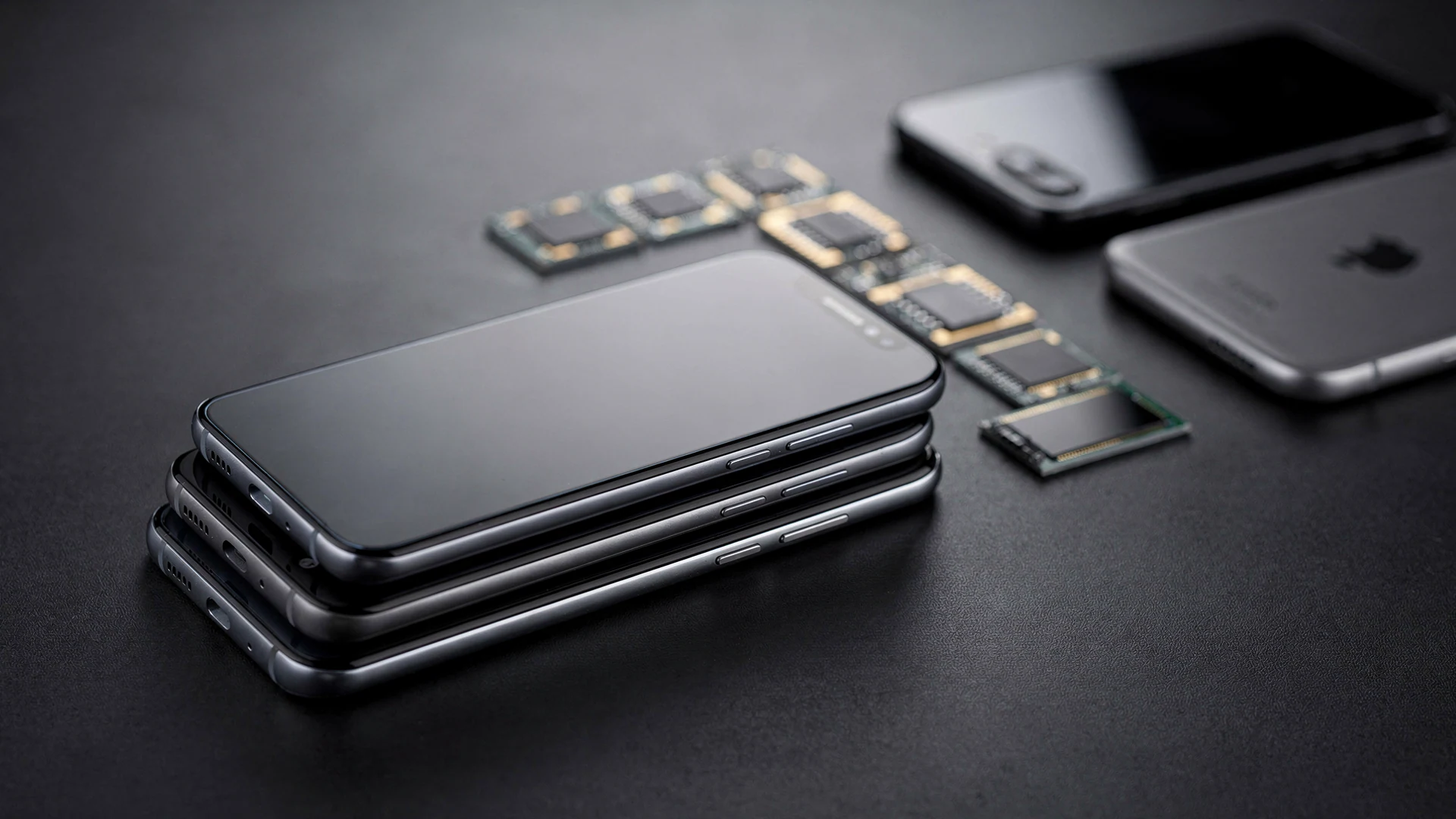
Samsung ships 60.5M phones in Q2 2026 as memory-chip costs squeeze budget rivals
Samsung shipped 60.5 million Galaxy smartphones in the second quarter of 2026, a 5% year-over-year increase that kept it firmly at the top of the global market — even as the industry as a whole shrank. New data from market researcher Omdia shows worldwide shipments fell roughly 6% year over year to 272 million units in Q2 2026, with the damage concentrated exactly where value-seeking buyers usually shop: the sub-$400 price band.
Only the top two grew
Samsung’s 60.5 million shipments gave it a 22% share of the global market, up two percentage points from a year earlier, when it shipped 57.5 million units. Apple followed in second place with about 55 million phones and a 20% share, marking its strongest-ever second quarter on a shipment jump of roughly 23%. Among the major vendors, these two were the only ones to expand — the defining feature of the quarter.
Below them, the picture darkens fast. Xiaomi, long the champion of value-for-money phones, shipped 31.2 million units — a 26% drop and its second consecutive quarterly decline. OPPO, including its OnePlus and realme brands, moved 28.4 million phones, down 17%. Vivo slipped 18% to 21.5 million. All remaining vendors combined — from Motorola and Google to Honor, Tecno and Infinix — shipped 75.2 million units, a 10% decline.
Why now: the memory crunch inverts the budget playbook
Omdia attributes the downturn to a prolonged memory-chip crisis that has disrupted supply and sharply pushed up component costs. The impact was most severe in the sub-$400 segment, where thin profit margins and price-sensitive consumers leave little room to absorb pricier components. That is the logic behind an otherwise surprising result: the market’s most popular price band is also its most exposed.
For years, Chinese brands grew by pairing competitive hardware with aggressive pricing. The memory crunch inverts that formula. When components are scarce and expensive, scale and pricing power decide who grows. Samsung, with deep supply-chain advantages, and Apple, which industry commentary says held pricing steady while rivals raised theirs, both expanded. The rest contracted.
Counterpoint Research’s parallel data tells the same story in revenue terms: global smartphone revenue rose 7% year over year to a record $109 billion in Q2 2026, with Apple capturing 49% of it. Xiaomi’s revenue fell 17% even as its average selling price rose 13% — volume disappeared faster than price recovery could compensate.
What it means for business in Turkmenistan
For retailers, distributors and mobile operators in Turkmenistan — where cost-sensitive buyers often turn to budget Android brands such as Xiaomi, realme, Tecno and Infinix — this is a practical concern, not an abstract chart. Rising memory costs will feed through to wholesale and retail prices for entry-level and mid-range phones, squeezing margins and slowing sell-through in the most price-sensitive part of the market.
The practical takeaways: treat memory pricing as the swing factor in procurement for the next two or three quarters; rebalance inventory toward vendors with supply-chain resilience; and expect the “flagship specs at budget prices” promise to become harder to deliver. At the same time, Samsung’s global momentum — powered in part by demand for its Galaxy S26 series, per industry coverage — suggests that even in markets that skew toward low-cost devices, buyers and channels may start gravitating toward brands that can keep prices stable.
None of this means budget phones are disappearing. It means they will cost more, and the brands that survive the crunch will be those with the scale to absorb component inflation — a reminder that in a hardware business, the supply chain is the business.
Sources:
Updated August 1, 2026