
India’s smartphone market shrinks 11% but gets richer: record $315 ASP reshapes the channel
India smartphone shipments fell 11.1% YoY in Q2 2026 to 33.2 million units, but average selling prices hit a record $315 as memory costs redraw the market’s center of gravity.
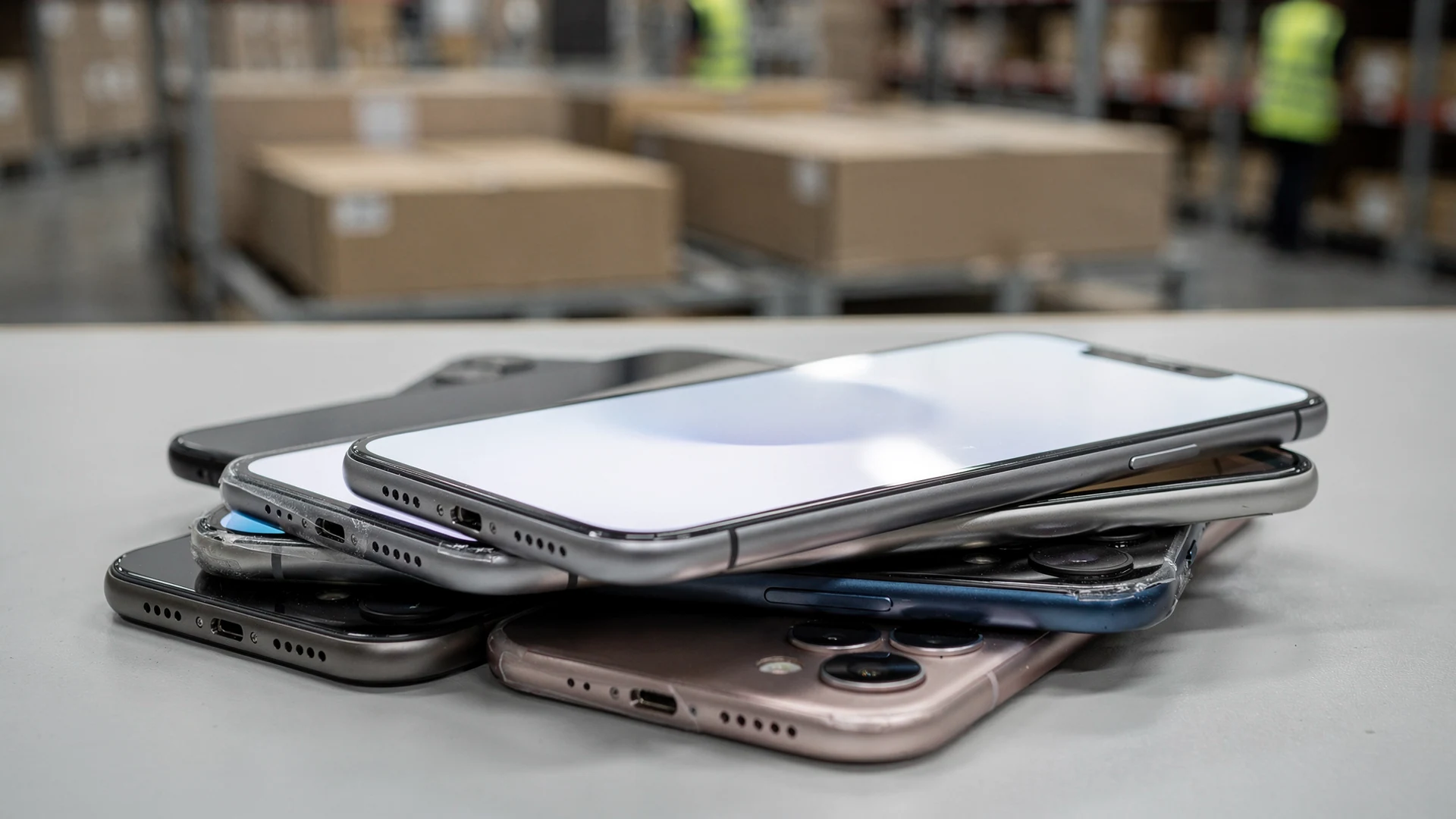
India’s smartphone market just got smaller and richer at the same time. Shipments fell 11.1% year on year to 33.2 million units in Q2 2026, according to IDC’s Worldwide Quarterly Mobile Phone Tracker, yet the market’s value grew 3.6% as the average selling price hit a record $315.
The headline numbers point to a market in transition rather than decline. First-half shipments of 64.2 million units were the lowest in five years, but IDC analysts attribute the contraction less to falling demand than to a sharp repricing of hardware. Soaring memory costs pushed vendors to pass on higher component prices and trim discounts, and buyers responded by shifting spend toward midrange and premium devices.
The entry level is evaporating
The most dramatic shift is happening at the bottom of the market. Shipments of smartphones priced under $100 collapsed 74.3% year on year, shrinking that segment’s share from 15.6% to just 4.5%. The $400–600 band, by contrast, grew 60.3%, nearly doubling its share to 8.6%.
That is a structural change, not a blip. For device makers and channel partners, the economics of entry-level phones no longer work when memory costs erase already thin margins. Some budget buyers are stretching to higher-priced devices, financing them, or holding on to older phones longer.
Evidence of that stretching appears in the 4G revival. IDC data shows 4G shipments rose 40% quarter on quarter, lifting 4G’s share to 11.1% from 5.8%. The average 4G device sells for $109 versus $341 for 5G, so cost-sensitive buyers are opting for older connectivity to stay inside their budgets — even though 4G ASPs themselves rose 47.9% year on year.
Chinese brands feel the squeeze; Samsung and Apple hold firm
The pain is not evenly distributed. Vivo remained India’s largest smartphone brand, but its shipments fell 13.9%, trimming its share to 18.4%. OPPO dropped 8.5%, Xiaomi 10%, realme 14.2%, and Poco 12.3%. The steepest decline belonged to iQOO, whose shipments plunged 61%.
Samsung and Apple, meanwhile, posted slight shipment growth of 0.4% and 0.7% respectively, lifting their shares to 16.4% and 8.5%. Motorola and OnePlus were relatively resilient, with declines of 8.9% and 2.5%.
Brands with premium portfolios, strong supply-chain leverage, and financing partnerships are better positioned in a memory-cost environment. Apple recorded the highest average financing tenure in India at 17.2 months, according to a separate Counterpoint report, while Samsung led in units sold through financing.
The retail pendulum swings offline
Offline stores are making a comeback, capturing more than half of all shipments in Q2. That reverses a years-long e-commerce tilt and has practical implications for distribution strategy. Physical retail is where financing programs, trade-in offers, and in-person demos tend to close deals — capabilities that matter when prices are rising and buyers need reassurance about value.
For B2B readers, this is the part that matters most. Enterprise mobility teams, distributors, and retail chains should expect:
- Higher hardware costs to persist. Global memory constraints pushed average selling prices up 17% to a record $400 worldwide in Q2, according to Counterpoint. India is not an island.
- Midrange substitutes. With the $400–600 band growing 60%, vendors are repositioning portfolios toward that sweet spot. Procurement strategies built around $200 devices need revisiting.
- Financing as a lever. Longer tenures and NBFC-driven EMI plans are quietly becoming the default affordability mechanism. Channel players that integrate financing at the point of sale will capture more of the shift.
- Inventory caution. IDC expects shipments to decline by more than 15% in the second half, with full-year volumes landing near 128–130 million units. Excess inventory in the wrong price bands could become a costly problem.
The takeaway
India’s smartphone market is not collapsing — it is repricing. Volume is falling while value grows, and the center of gravity is moving from sub-$100 devices toward the $400–600 band and premium flagships. For vendors, the winners are those with the margin structure, supply chain, and retail financing to ride out the memory crunch. For business buyers, the practical response is to plan for higher device costs, lean into midrange replacements, and use financing to keep refresh cycles alive.
The market is at its smallest in five years by volume, but the revenue opportunity is healthier than the shipment chart suggests. Companies that adjust their playbooks for a higher-ASP reality will find plenty of room to grow.
Updated August 12, 2026