
India's 'RAMpocalypse' pushes smartphone prices to a record $315 — and reshuffles the market
Memory-chip prices have quadrupled since September 2025, pushing India's average smartphone price to a record $315 and redrawing the competitive map: Chinese budget brands are losing share while Samsung and Apple gain. Here's what it means for B2B buyers.
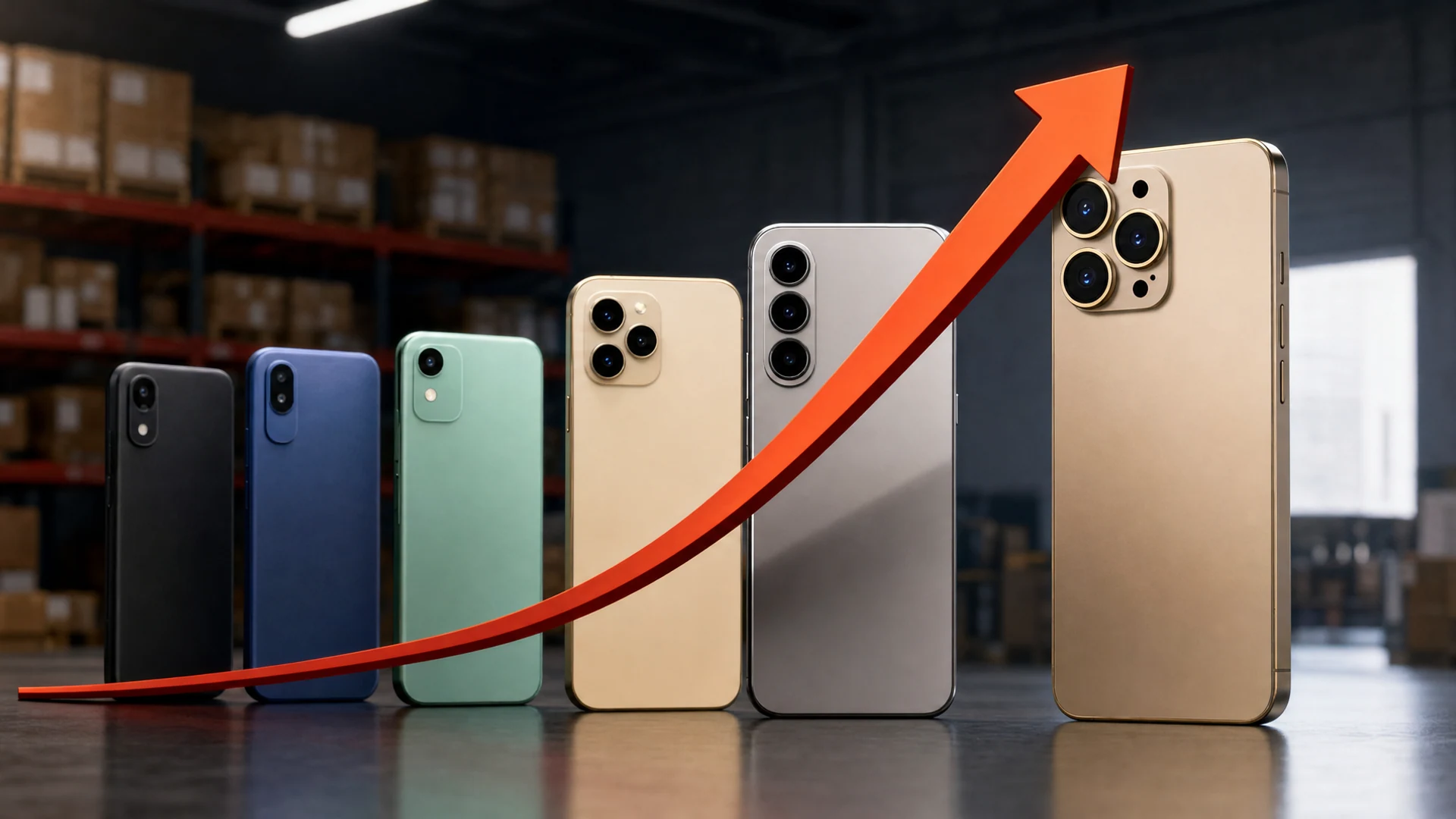
India’s smartphone market just crossed a milestone no one wanted: the average selling price (ASP) hit a record $315 in the June quarter, up 14.4% from a year ago — even as total shipments tumbled 11.1% year on year to 33.2 million units. The driver is a global memory-chip shortage so severe that analysts have nicknamed it the “RAMpocalypse,” and it is redrawing the competitive map of the world’s second-largest smartphone market.
What happened
Memory chip prices have quadrupled since September 2025, according to Counterpoint Research, pushed by explosive demand from AI data centers. The crisis is hitting India’s entry tier hardest. International Data Corporation (IDC) reports that shipments of phones priced below $100 plunged 74.3% year over year in the June quarter, while Business Standard notes the sub-₹10,000 segment collapsed from an 18% volume share of the market in Q3 2025 to just 4% by Q2 2026. Memory now accounts for more than 45% of the bill of materials in entry-level devices, up from 15-20% a year earlier — a nine-fold price surge in nine months.
That math leaves OEMs with an impossible choice: absorb the cost and eat margins, or pass it along and watch volumes fall. Most are passing it along. Realme has raised prices up to ₹4,000, Oppo up to ₹5,000 on its Reno and A-series, Vivo by ₹500-4,000, and OnePlus by ₹2,000-4,000. Samsung raised prices across its S, M and F series, with one Galaxy S25 variant now ₹12,000 more expensive. IDC’s Upasana Joshi estimates affected models rose an average of ₹3,200 between April and July, and she expects a further 7-10% increase in coming months.
A market reshuffle
The squeeze is reshaping the competitive order. Chinese brands, which dominate the $150-and-under segment and hold four of the top five spots, are shipping sharply fewer units. IDC data shows Vivo down 13% year on year, Realme down 14.2%, Xiaomi down 10%, Oppo down 8.5%, Poco down 12.3%, and iQOO down 61% in Q2. Meanwhile, Samsung held shipments essentially flat and grew its share to 16.4% — a gain of nearly 200 basis points — while Apple added 100 basis points to reach 8%. Counterpoint’s weekly sellout tracker shows Apple posted the strongest sales growth of any brand from April through July, up 15% year on year, driven by sustained demand for the iPhone 17 series and installment plans.
This isn’t a sudden consumer preference for premium devices. It’s a supply-side reordering: the affordability of budget devices evaporated, and financing options are making premium devices more accessible. As CNBC notes, customers are gravitating toward premium brands as memory prices surge and Chinese makers pass on costs. The result is a market shrinking in units but growing in dollars — value rose 3.6% even as sales volumes fell 7.9%.
Why it matters for business buyers
For B2B technology purchasers, this has three material consequences. First, procurement costs: if you’re outfitting fleets of budget Android devices for field teams, warehousing, logistics or retail staff, expect to pay 7-10% more in coming quarters, per IDC’s trajectory. Second, refresh cycles will lengthen as replacement costs climb, so enterprises should factor memory inflation into device lifecycles. Third, portfolio risk: if you rely on entry-level Chinese OEM supply chains, plan for longer lead times and vendor shifts into higher price bands rather than absorbed costs.
Retailers and distributors face compressed margins too. Reports from Indian trade media warn that consumers should not expect deep Diwali discounts; exchange offers and bank cashback are replacing outright price cuts, and device financing is becoming a more important sales lever — which is precisely why Apple’s installment-driven growth in India has outpaced the market.
Another B2B wrinkle: over 99% of phones sold in India are produced domestically, IDC notes. That means the memory crunch hits local assembly lines and component supply chains directly, not just import economics.
Outlook
Counterpoint expects the Indian smartphone market to decline about 13% this year, with the second half performing better than the first as festive demand provides some support. Globally, it forecasts a 14.3% drop in unit shipments for 2026, with Chinese manufacturers bearing the brunt — and predicts Samsung will regain the top position. Memory cost pressures are expected to continue through the second half of 2026, with meaningful recovery unlikely before 2028.
The big picture for any business that touches smartphones: the era of cheap memory-driven hardware is on pause. Price competition has shifted to financing and trade-in economics, and the “RAMpocalypse” has become a structural advantage for balance-sheet-rich OEMs like Samsung and Apple that can absorb component costs and lean into premium portfolios. For 2026, the buyer’s playbook is simple — budget for higher ASPs, extend device lifecycles, and treat installment programs as a procurement tool, not just a consumer feature.
Updated August 21, 2026