
Global Smartphone Market to Shrink 14% in 2026 — and Samsung Is Poised to Reclaim No. 1
Counterpoint Research forecasts global smartphone shipments will fall 14.3% in 2026, driven by the memory-chip shortage. Samsung is expected to grow 0.8% and retake the No. 1 spot from Apple.
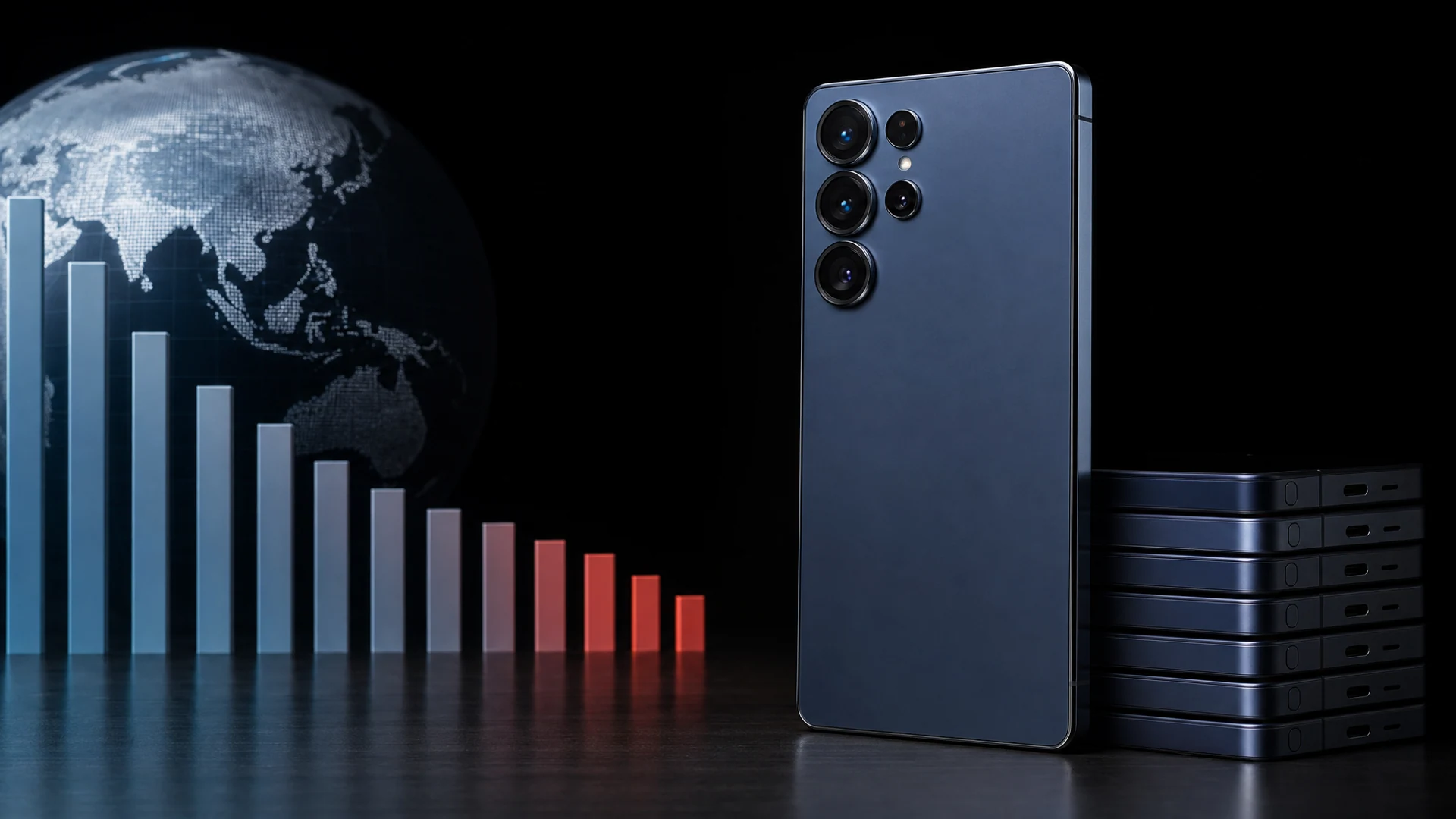
A shrinking market with a new No. 1
Counterpoint Research’s August 21, 2026, outlook is blunt: global smartphone shipments are forecast to fall 14.3% year over year in 2026, and the pain won’t fully end with the calendar year. A tightening memory-chip supply, thinner availability of low-cost devices, and weaker consumer affordability are the three forces pulling the market down. The same report expects 2027 shipments to slip another 1.4% before a recovery takes hold in 2028.
The surprise is who benefits. Samsung is forecast to grow shipments by roughly 0.8% in 2026, enough to retake the global No. 1 position from Apple, which finished 2025 on top with a 20% shipment share versus Samsung’s 19%. Counterpoint expects Apple’s shipments to decline about 2.1% in 2026, then resume growth at around 2.8% in 2027. The shift matters less for bragging rights than for what it says about supply-chain resilience in a component-driven downturn.
Why now: memory, not demand
The heart of the story is the memory-chip shortage. Counterpoint has repeatedly pointed to memory supply and pricing, rather than consumer appetite, as the deciding factor for the next 18 to 24 months. Q2 2026 data already showed the strain: global shipments fell 11% year over year in the quarter, the weakest second quarter since 2013, while Samsung captured 24% of the market.
The pricing pressure is uneven. At lower price points, components account for a much larger share of the bill of materials, leaving budget-device makers little room to absorb cost increases without raising retail prices or cutting promotions. Counterpoint co-director Yan Striyak noted that manufacturers are already trimming promotions to protect margin. In regional Q2 data, Europe shipments dropped 10% to 35 million units and Latin America fell 10%, while China sales were down 8.6% in the first 30 weeks of the year. India’s market is forecast to shrink about 13% for full-year 2026.
Samsung’s structural edge
Samsung’s expected growth in a falling market comes down to vertical integration. Principal Analyst Wang Yang told SamMobile that Samsung’s return “comes down to its internal component capabilities, broad portfolio, and established operator and retail relationships.” In other words, the company can lean on in-house memory and display production, defend volume aggressively, and push a diversified lineup across price tiers—luxuries most rivals don’t have.
For B2B buyers, this is the operational takeaway: when upstream memory allocation tightens, vendors with internal component supply gain a negotiating advantage. Channel partners may see steadier allocation from Samsung, while smaller brands face deeper cutbacks. Most major Chinese OEMs are forecast to see shipments fall 15% to 34% in 2026, reflecting their heavier exposure to lower-priced devices and emerging markets.
Apple’s constrained game
Apple will outperform the broader market—a 2.1% decline versus 14.3%—but Counterpoint says higher pricing and a staggered launch cadence cap its upside. Its first foldable iPhone is not expected to dramatically change the shipment trajectory. For premium-segment buyers this means Apple remains stable but not aggressive on volume; for competitors, the premium tier stays contested.
What the recovery looks like
Counterpoint sees 2028 as the turnaround year, with shipments expected to grow about 4.8% as component availability improves, retail pricing stabilizes, and purchases postponed during 2026–2027 finally move. The firm expects the market to return to 2024–2025 levels by the end of the decade as 6G commercialization widens the upgrade cycle.
For procurement and planning teams, the practical horizon is clear: budget for higher device costs and tighter allocations through 2027, delay major refresh commitments if possible, and treat memory pricing as the key market indicator to watch. The competitive shakeout also means vendor selection matters more than usual—supply-chain depth, not just product specs, will separate this cycle’s winners.
Takeaways for procurement and channel teams
- Treat memory pricing as the lead indicator; Counterpoint sees supply constraints continuing through 2026’s second half and recovery unlikely before 2028.
- Expect tighter allocation to smaller brands; factor vendor supply-chain depth into sourcing decisions.
- Plan refresh cycles around 2028 if possible, when prices stabilize and postponed demand is released.
- Budget for higher device costs through 2027; expect fewer promotions as vendors defend margin.
Sources: Counterpoint Research, SamMobile, Sammy Fans, The Hindu.
Updated August 22, 2026