
CXMT reaches LPDDR6 mass production first — Xiaomi's 18 Fold carries the proof
Chinese DRAM maker CXMT says its LPDDR6 memory has entered mass production and will debut commercially in Xiaomi's 18 Fold, a first-mover milestone ahead of Samsung and SK hynix.
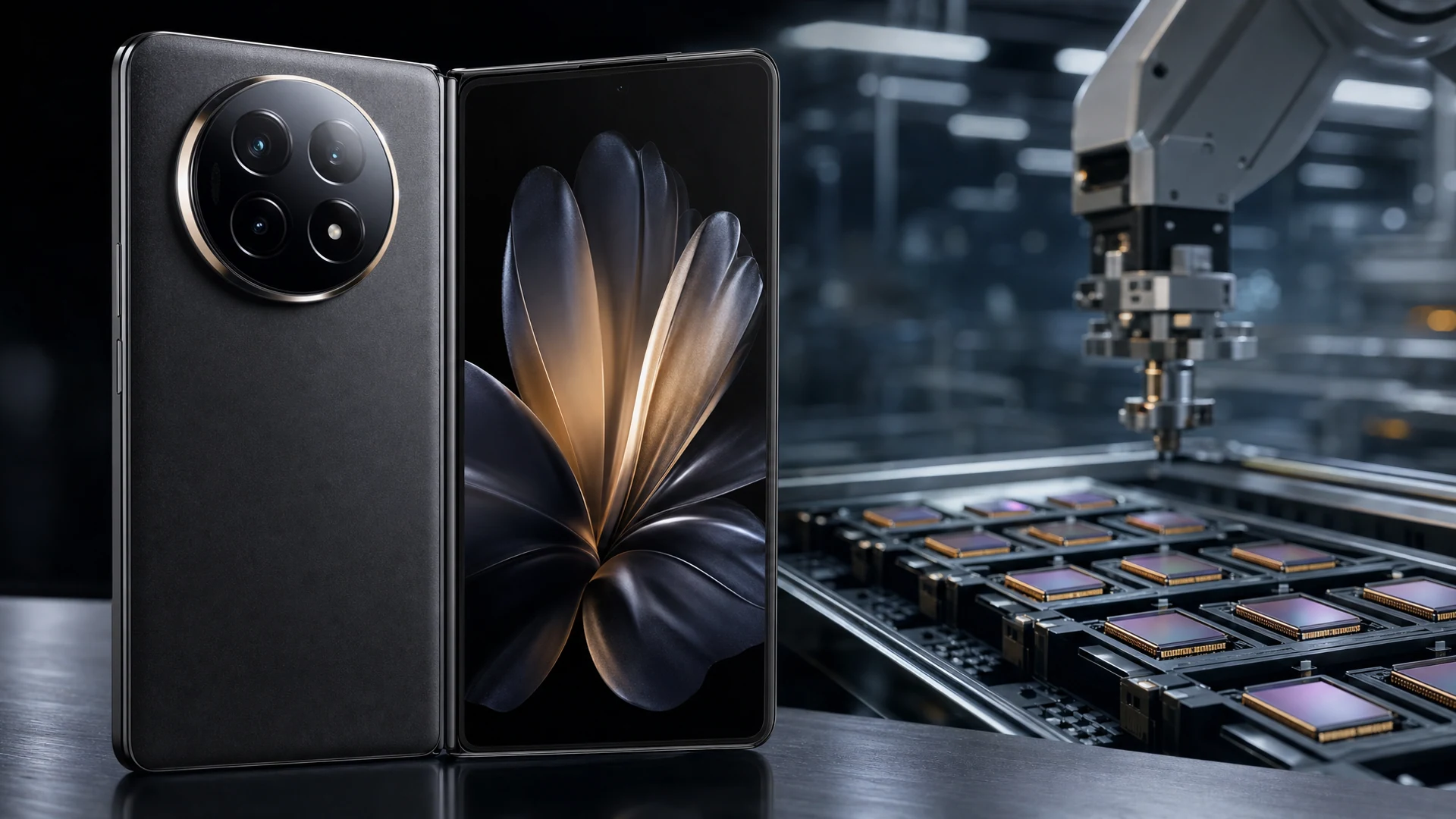
ChangXin Memory Technologies (CXMT) said on Aug. 29 that its LPDDR6 DRAM had “officially entered mass production,” with the first commercial deployment set to ride inside Xiaomi’s 18 Fold, a wide-aspect foldable launching in China on Sept. 7. That makes CXMT the first memory vendor to publicly confirm both high-volume output and a named smartphone customer for LPDDR6 — ahead of Samsung Electronics and SK hynix, which, as of the announcement, had not disclosed an equivalent timeline or device partner.
Shipments to Xiaomi’s assembly plants are already under way, CXMT said. Xiaomi, for its part, calls the 18 Fold the world’s first foldable phone to integrate LPDDR6 memory, and the pairing is unusual because it was designed at the silicon level. The phone runs on Xiaomi’s in-house 3 nm Xring O3 processor, described as the first mobile platform engineered with native LPDDR6 interconnect architecture. In effect, the logic chip and the DRAM next to it were developed as one system.
Faster memory, faster ramp
CXMT’s LPDDR6 parts reach a peak data-transfer rate of 12,800 Mbps (12.8 Gbps), above the 10.7 Gbps baseline in the LPDDR6 JEDEC specification, and scale up to 16 GB per module using 16 Gb dies. That bandwidth at low power is exactly what premium handsets now need for on-device AI workloads and heavy multitasking — the same features used to justify flagship pricing.
Speed of execution is as notable as raw throughput. CXMT says it moved from LPDDR5/5X to commercial LPDDR6 high-volume manufacturing in under a year — a faster ramp than typical industry development cycles. Industry observers have already recalibrated. “It put CXMT into the first wave of competition around the latest mobile-memory standard alongside global heavyweights Samsung Electronics, SK Hynix and Micron Technology,” Wang, an industry expert quoted by China Daily, said.
CXMT also has fresh capital to extend that push. Its Shanghai IPO raised 57.9 billion yuan (about US$8.6 billion), funds the company can direct toward capacity, packaging and next-generation engineering.
A commercial reality check
The “first commercial LPDDR6” badge is real and valuable in marketing terms, but the first launch volume is small. Xiaomi is targeting roughly 200,000 to 300,000 shipments of the 18 Fold, according to a Korea Herald report cited by ANI. The handset is expected to retail around ¥12,000 in China, so this single device will not change CXMT’s revenue picture this year. The strategic value is elsewhere: putting next-generation DRAM in a marquee product months before the traditional standard-bearers.
The announcement also carries a caveat that industry watchers keep repeating: saying “mass production” before Samsung or SK hynix does not mean CXMT has overtaken them technologically. The incumbents hold deep advantages in yield engineering, reliability track records and long-standing supplier relationships. CXMT’s first LPDDR6 generation will be judged in the field, not on a press statement.
Why this matters for business technology buyers
For component planners and B2B buyers, the concrete takeaway is that the mobile-memory frontier now has a credible fourth player at the starting line. That is useful leverage in procurement discussions, but it is early leverage. A single high-profile foldable design is not proof of stable, multi-million-unit supply.
Three signals are worth watching after the Sept. 7 launch. First, consumer reception and real-world performance of the 18 Fold — a stumble would push follow-on LPDDR6 orders further out. Second, whether CXMT wins additional smartphone designs over the next two quarters, which would show the ramp is real beyond one customer. Third, how quickly Samsung and SK hynix respond with their own commercial LPDDR6 plans; their response will shape pricing and qualification pressure for every downstream buyer.
The deeper point for executives is about dependency. A new DRAM entrant with a working next-generation product gives handset makers, AI-device vendors and cloud buyers an alternative in a highly concentrated supplier base. That independence — not just the first-mover headline — is the durable business story. For CXMT, the harder work starts now: proving yields at scale, winning sockets beyond Xiaomi, and holding its newcomer position when the dominant incumbents ship in volume.
Updated September 2, 2026