
CXMT kicks off LPDDR6 mass production, lands Xiaomi foldable as launch customer
ChangXin Memory Technologies has started mass production of LPDDR6 DRAM, with Xiaomi's 18 Fold foldable as the debut device. The September launch will test the first commercial LPDDR6 deployment and a new DRAM supply chain dynamic.
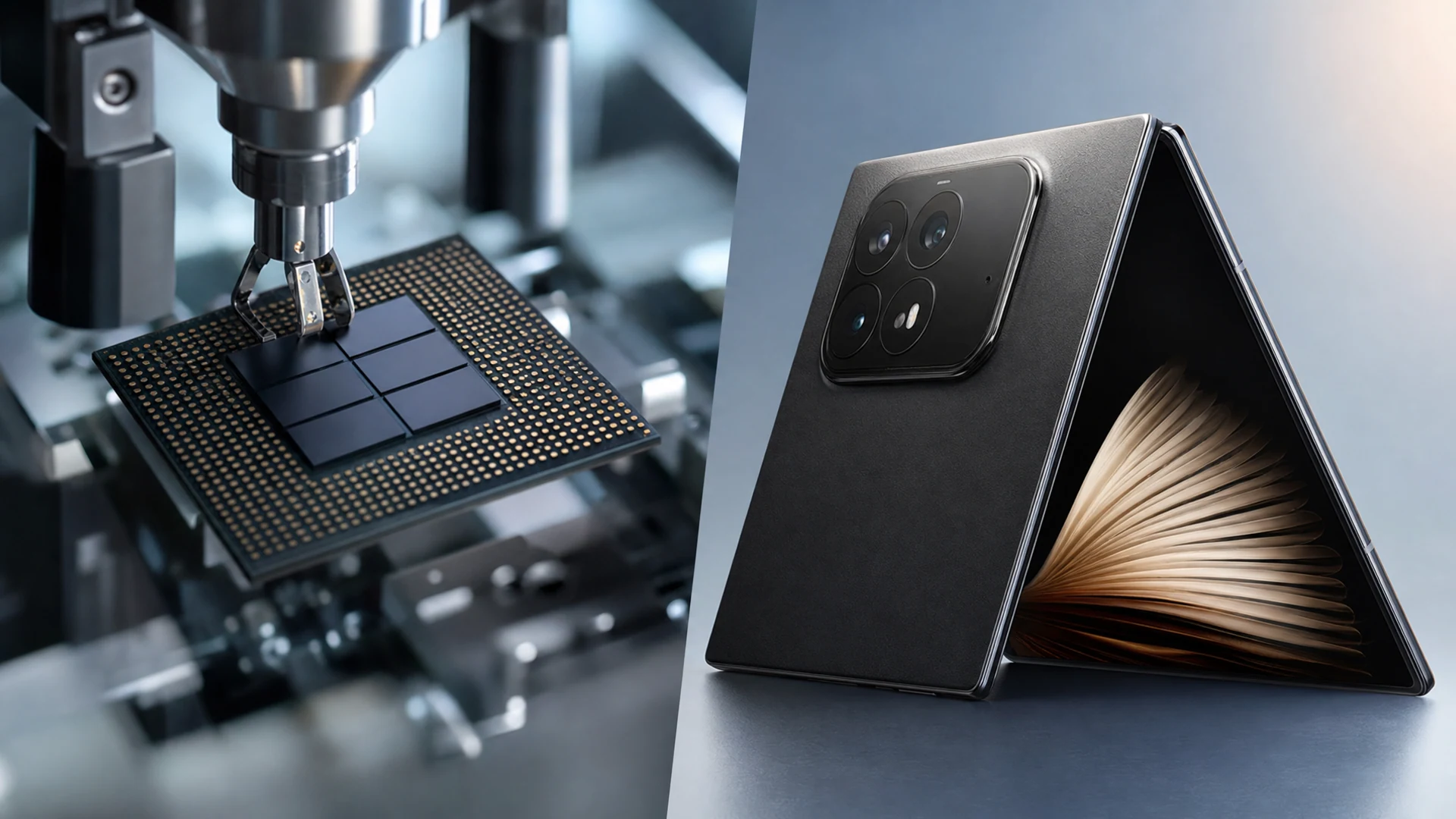
ChangXin Memory Technologies (CXMT) said on Saturday, August 29, that it has started mass production of LPDDR6 DRAM, with Xiaomi’s upcoming 18 Fold foldable smartphone confirmed as the debut device. Xiaomi confirmed the arrangement via its official Weibo account, and both companies said the phone is scheduled for release in September.
The announcement marks the first commercial deployment of LPDDR6, according to CXMT’s statement, and puts a Chinese memory maker at the front of the pack on a next-generation mobile memory standard — a position historically held by a small group of incumbent DRAM suppliers. CXMT’s LPDDR6 is rated for peak transfer speeds of up to 12,800 Mbps and a maximum capacity of 16GB per chip, according to the company’s 2026 interim report filed with the Shanghai Stock Exchange.
The memory will be paired with Xiaomi’s in-house 3-nanometer XRING O3 processor, unveiled on August 24 as the first chipset to support LPDDR6. The Xiaomi Pad 9 Pro Max is also expected to ship with the same SoC and memory combination. Xiaomi has opened pre-reservations for the 18 Fold in China, confirming Leica co-engineered cameras.
A fast follow to LPDDR5
CXMT’s jump to LPDDR6 comes less than a year after the company began mass-producing LPDDR5 chips. That cadence matters for enterprise buyers and device makers: it signals that the company can move a next-generation memory standard from sample validation to volume production in a relatively short window. The company’s interim report, filed earlier this month, described LPDDR6 as still under customer validation with mass production being accelerated. The August 29 announcement upgrades that status to active production, though CXMT did not disclose shipment volumes or yield data.
Implementation details published by technology reviewers show the first LPDDR6 deployment running at 10,667 MT/s paired with the XRING O3, below the 14,400 MT/s ceiling of the LPDDR6 specification, and using a wider 24-bit interface compared with LPDDR5X. That means the first commercial device may not immediately exercise the full potential of the standard, but it leaves headroom for future tuning across the XRING O3 platform and subsequent devices.
Why this matters for the memory market
For years, leading-edge mobile DRAM has been dominated by a small group of suppliers with established qualification pipelines and long-standing relationships with global smartphone brands. CXMT’s LPDDR6 entry introduces a new competitive dynamic: the first commercial LPDDR6 device will not use memory from the usual incumbents. That is significant for smartphone OEMs seeking supplier diversification and negotiating leverage, and for component buyers watching DRAM pricing cycles.
The commercial pairing also carries strategic weight. Xiaomi is pairing its own application processor with locally sourced next-generation memory in a premium flagship, creating a vertically integrated component story that other device makers will likely study closely. The in-house XRING O3 chipset combined with CXMT’s LPDDR6 means Xiaomi controls more of the core silicon bill of materials in its highest-end product line, reducing dependence on third-party processor and memory suppliers.
What it means for foldables and flagship phones
The Xiaomi 18 Fold becomes a showcase for what LPDDR6 enables in a flagship form factor. Higher memory bandwidth supports on-device AI workloads, faster multitasking, and large language model execution directly on the handset — areas where foldable flagships are increasingly competing. The 12,800 Mbps peak speed and up to 16GB per-chip capacity provide headroom for AI features, while LPDDR6’s power efficiency improvements help manage the thermal and battery constraints of foldable designs, where thin chassis and dual displays place a premium on energy efficiency.
For Xiaomi, the timing is strategically useful: a September launch of its flagship foldable positions the 18 Fold as a first-mover in the LPDDR6 era, distinguishing it in a crowded market segment. Pre-reservations are already open in China, and the device is expected to carry Leica-branded cameras, further strengthening its premium positioning.
Material risks and open questions
CXMT has not disclosed shipment volumes, yields, or the number of customers beyond Xiaomi. The LPDDR6 chips are initially validated in a single smartphone model, and the company’s stated future applications — mobile devices, servers, and smart vehicles — remain largely unconfirmed beyond the Xiaomi handset. The first implementation runs below the LPDDR6 spec ceiling, which means real-world performance gains versus LPDDR5X could vary depending on workload and system tuning.
Enterprise buyers and device makers should also watch how the competitive response develops. Incumbent DRAM suppliers have deep experience with high-volume mobile memory production and long-standing qualification relationships with global smartphone brands. CXMT’s path from first commercial deployment to broad market share will depend on yield improvements, cost competitiveness, and the ability to scale beyond a single flagship launch.
For now, the key takeaway is concrete: a new DRAM supplier has reached mass production on a next-generation mobile memory standard, and it has a major smartphone brand as a launch customer. That combination has the potential to reshape supply chain assumptions in a market that has seen limited supplier churn at the high end. The September launch of the Xiaomi 18 Fold will provide the first real-world test of whether CXMT’s LPDDR6 delivers on its performance and efficiency promise at volume.
Updated August 30, 2026