
Apple's iPhone 18 Pro memory bill jumps nearly 400% — and AI data centers are why
TrendForce says Apple is paying nearly four times more for memory in the 256GB iPhone 18 Pro, yet plans only a ~$100 price bump. The real story: AI infrastructure demand now sets component prices for consumer devices.
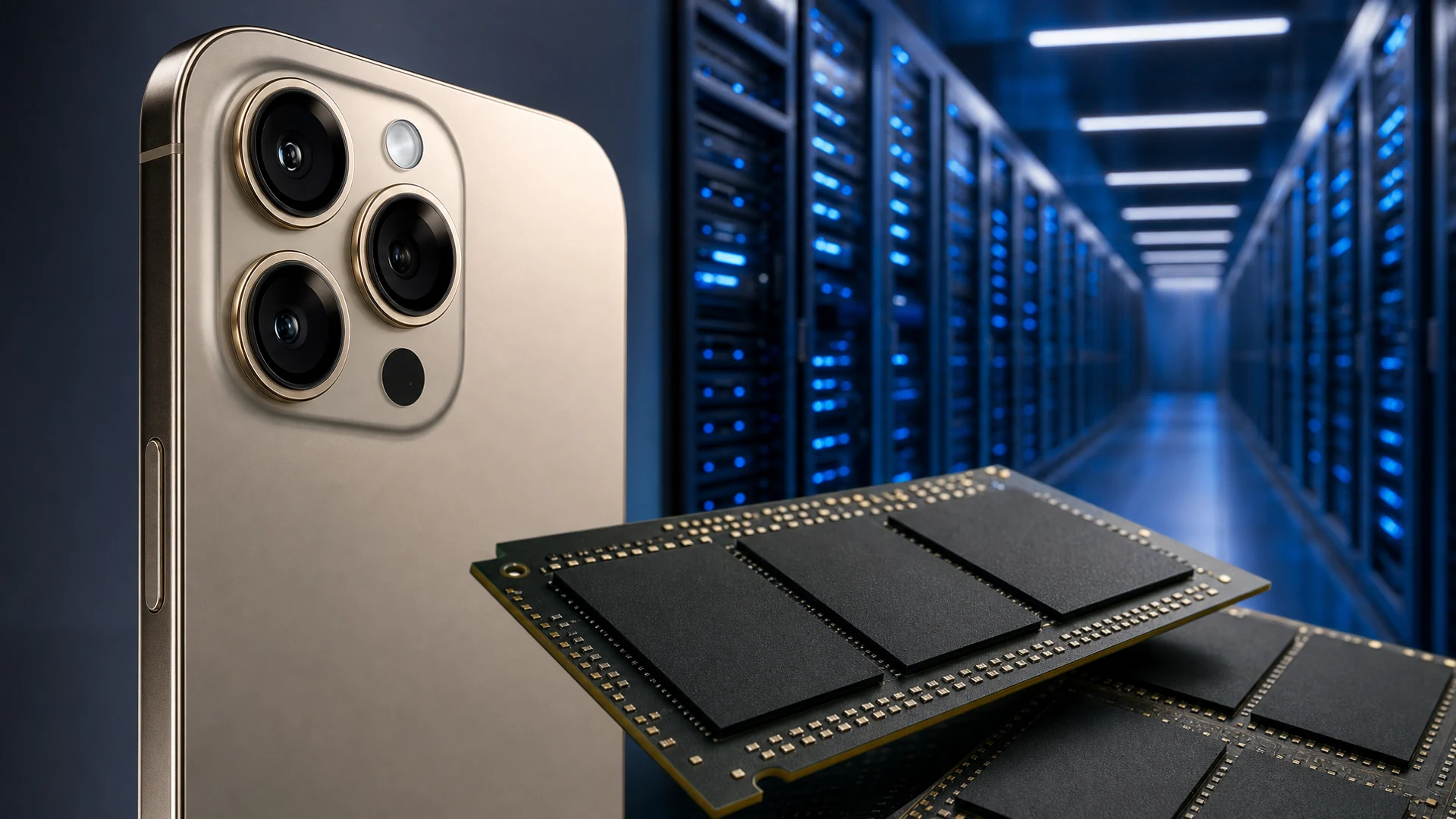
Apple may be days away from unveiling its most expensive iPhone yet, and a Thursday TrendForce report explains why: memory procurement for the 256GB iPhone 18 Pro is running nearly 400% higher than a year ago — a cost shock that is forcing even the industry’s best-positioned buyer to raise prices.
TrendForce’s September 3 forecast, published ahead of Apple’s September 9 product event, estimates Apple’s memory costs for the upcoming iPhone 18 lineup roughly quadrupled year-over-year in Q3 2026. For the 256GB Pro model, memory’s share of the bill of materials (BOM) is expected to jump from about 10% to 34%, pushing that device’s total BOM 38% above the same-capacity iPhone 17 Pro.
The firm projects Apple will raise the iPhone 18 Pro by roughly $100 over its predecessor while keeping lineup-wide increases at 10–20%, a strategy TrendForce calls a “moderate pricing approach” given the underlying component spike. The foldable iPhone, referenced under the working name “iPhone 18 Fold,” could start between $2,099 and $2,299, with top configurations crossing $3,000.
A memory crisis imported from the data center
The iPhone 18 pricing math is a downstream symptom of a supply reallocation that began in AI infrastructure. Memory makers are prioritizing wafers and capacity for AI accelerators and enterprise SSDs. TrendForce previously noted that low-power mobile DRAM availability has tightened as suppliers shift output toward AI-oriented products, while NAND allocation increasingly flows to enterprise storage.
Independent forecasts corroborate the squeeze. Gartner projected combined DRAM and SSD prices rising 130% by the end of 2026 versus 2025 levels, enough to lift average smartphone prices an estimated 13%. Counterpoint Research finds the global average smartphone selling price up roughly 15% in 2026, with storage “reshaping the industry’s pricing structure” and leaving OEMs little room to absorb increases. Susquehanna estimated DRAM contract prices rose 50–60% in a single quarter and NAND flash 75–100%, based on a May market note.
The suppliers see no early relief. SK Hynix’s chief executive told Reuters in July to expect 2027 to be the worst year in memory supply terms, with customer demand possibly exceeding production capacity beyond 2030. Samsung has reportedly signed multi-year binding contracts with buyers seeking guaranteed supply.
One clarification matters for business audiences: the “nearly 400%” figure refers to the 256GB Pro’s combined DRAM and NAND procurement costs year-over-year — not a quadrupling of RAM capacity or a pure NAND price spike. And the “up to $3,000” figure applies to the top foldable configuration, not the standard Pro.
What Apple’s pricing strategy signals
Apple’s willingness to absorb most of the increase — turning a fourfold component-cost rise into a roughly $100 retail bump for the Pro — is a useful case study in pricing power. TrendForce indicates Apple may lean on its services business to offset hardware margin pressure.
But the moderation is unlikely to be free. A near-400% memory cost increase against a 10–20% street price rise means Apple’s hardware margins absorb the balance, at least this cycle. The signal to enterprises is still unambiguous: flagship smartphones are getting structurally more expensive, and this is not a one-off.
Counterpoint expects more than 40% of phones on the market to see price hikes during 2026, with new models costing about 25% more year-over-year. For procurement teams managing mobile fleets, the era of stable handset pricing is over: memory now sets the pricing tempo.
What device buyers should do
First, model two scenarios: one with a roughly $100 per-device increase on premium flagships, and a second where memory prices keep climbing into 2027 and the next iPhone cycle repeats the bump. Memory suppliers such as SK Hynix and Samsung are already signaling through multi-year contracts that they expect tightness to persist, so plan as if prices will rise.
Second, reassess refresh cycles. If new premium devices rise 10–25% while existing fleets remain secure and supported, extending hardware life by six to twelve months becomes a financially material decision, not just an operational preference.
Third, watch mid-tier devices. Apple’s pricing decision tends to set an anchor for the wider smartphone market, and a 10–20% increase applied across the market will influence everything from enterprise mobility budgets to device-as-a-service contracts.
The story behind the story
The real narrative is not that Apple is paying more for memory. It is that AI data-center buildouts now set component prices for consumer electronics. Smartphones are no longer just competing against each other for memory; they are competing against AI servers with functionally unlimited budgets.
For B2B buyers, the takeaway is simple: this year’s smartphone price increase is an infrastructure cost — and it is priced to stay. Budget accordingly.
Updated September 5, 2026